

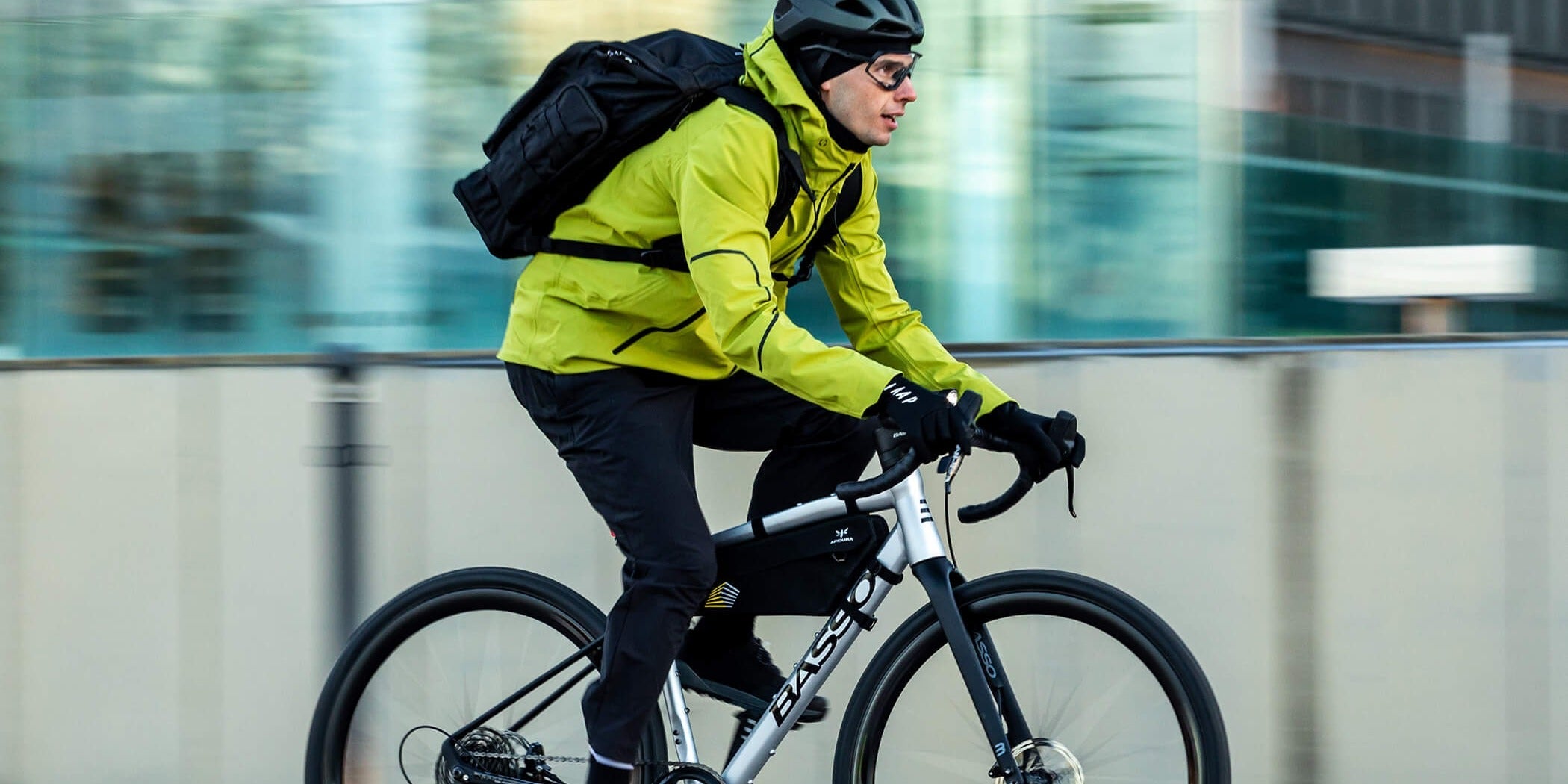
Cycling to work? The environment will thank you, but so will your wallet. And don't forget your health.
We know you love cycling. You probably ride your bike two or three times a week, at least when the temperatures allow it. In the winter, you might train on the rollers to stay in shape for the warmer months. But have you ever thought about combining business with pleasure?
WHY BIKE TO WORK?
Cycling to work not only helps you avoid traffic jams, but it also allows you to extend your workouts into your daily routine. Imagine: no more congested public transport to catch at the bus stop, significantly lower fuel consumption, and a fuller wallet at the end of the month. But above all, the knowledge that you're offering a tangible contribution to improving the air quality in your city.
THINK ABOUT YOUR HEALTH
The leading cause of death globally is cardiovascular disease, including heart attacks and strokes. In Italy, data from the World Health Organization (WHO) show an incidence rate of 34.8% of all deaths. The main strategy to combat it? Prevention. A daily routine that incorporates physical activity into your commute allows you to engage in cardiovascular exercises that help you feel better throughout the day.
Cycling trains your legs, your heart, but it also trains your mind. By pedaling at the right pace, you can regulate your breathing, relax, and think. Your daily productivity will certainly improve, too. Your interpersonal relationships will also improve thanks to a renewed sense of well-being.
TIME AND MONEY. SAVINGS RUN ON A BIKE
Have you ever done some calculations? What are your fixed costs related to your commute? Fuel, parking, car maintenance: for many people, these certainly represent a large monthly expense. You might think you could save money by taking public transportation, but you'd be subject to stress related to fixed schedules, changes, delays, and cancellations. A bicycle is better, as it gives you the flexibility you need to run to the supermarket when friends invite you over for dinner.
Want to talk about time? Consider that statistically, half of car trips are less than 5 kilometers. Let's say you live about 10 kilometers from your office. By car, if you drive on moderately busy extra-urban roads (observing the highway code), it could take you 20 to 25 minutes to get to work. With a quality bike and the right training, you can easily maintain an average speed of 20 kilometers per hour, arriving at your destination in 30 or 35 minutes. Sure, you'll have to wake up a few minutes earlier, but you'll have saved time on your evening workouts.
HERO FOR THE ENVIRONMENT
Global warming: you've surely heard about it. It's a serious problem for us, but especially for our children. It's important to remember how much we can do for the health of our planet simply by reducing atmospheric CO2 levels. Being part of the change today is no longer just an option; it's become our duty.
WHICH BIKE CAN YOU USE FOR BIKE-TO-WORK?
In the collective imagination, the bike for getting around the city is the classic steel urban model, perhaps with a basket and rack. The truth is that any bicycle can be suited to the task, but there are some models that best meet the needs of an experienced cyclist.
Obviously, the starting point for choosing the best bike for you is analyzing the route you'll be riding. How many kilometers will you have to cover? What is the condition of the road surface? What type of terrain will you be tackling?
Based on this information, you can decide. You could consider a comfortable commuting bike with flat handlebars and an aluminum frame, or your standard carbon racing bike, equipped with the right accessories. A front headlight and a rear parking light are definitely essential. A gravel bike could also be a viable option if you need a fast yet versatile bike. Wide-channel wheels, suitable for wide and hybrid tires, are ideal for the average conditions of Italian roads. You might encounter a few potholes, but you'll also need to negotiate some bumps with ease. On a gravel bike, you'll also have the option of mounting bags that can hold your lunch or a change of clothes for the day. Another essential accessory for the bike commuter is a mudguard. You might shudder at the thought of the lost aesthetics, but truth be told, there are truly minimally invasive mudguards on the market today. A small compromise to avoid unpleasant mud trails on your jacket, don't you think?
There are also electric alternatives to all these types of bikes, a useful way to reduce the effort if, for example, you don't have a changing room or a bathroom with a shower at your workplace (in this case, remember to bring sanitizing wipes with you).
LET'S TALK ABOUT COMFORT AND SAFETY
"Bike to work" is an activity you could ideally do year-round. Obviously, both the warmer and colder months present some challenges to consider. In winter, for example, the days get shorter, so you may find yourself leaving the office and pedaling on poorly lit roads. In this situation, it's essential to be prepared: always wear high-visibility clothing and accessories, such as our high-end wheels with reflective stickers. Remember to always keep your lights on and obey the highway code.
Choose your clothing carefully. You may need to change into a new outfit, or you may need waterproof and breathable riding gear that can be worn throughout the day. For example, there are Enduro-inspired shoes for flat pedals that won't cause you any problems when walking at crosswalks or when getting off your bike. Similarly, you can opt for commuting jackets and pants, which, while highly technical, offer a casual fit.
If your route is very long and challenging, we recommend opting for a classic cycling outfit. Padded shorts will increase your comfort in the saddle until you get to work. In this case, you could carry a change of clothes in a backpack or in special bags that attach to the bike frame.
IN CONCLUSION
There's a lot of talk about environmental protection, but the truth is that few are actually doing anything concrete to facilitate change. But things are changing rapidly. Even in Italy, despite the less than perfect condition of our bike paths. In 2020, our country saw bicycle sales increase by 17% (over 20 million bikes sold), with significant peaks in the gravel and e-bike sectors. The pandemic has also changed our lifestyles, and many people are changing their perspective on cycling as frequent bikers. What about you? Are you one of us?


