

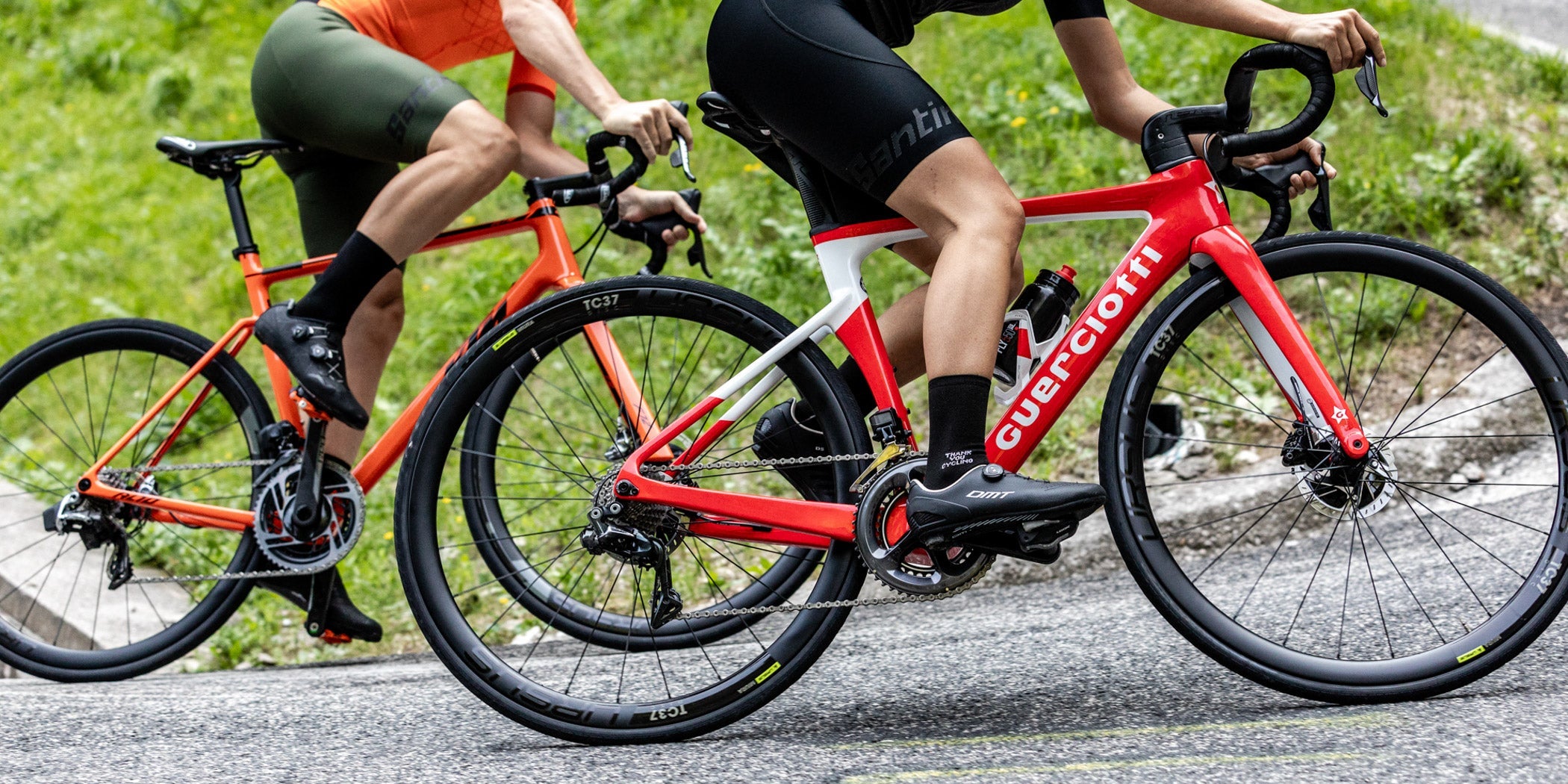
Cycling wheel technology is constantly evolving, and the new technical solutions proposed by manufacturers sometimes don't entirely satisfy the public. This is the case with the ongoing debate in the road world between disc brake wheel advocates and rim brake purists. Let's clarify things a bit.
What does the braking system on your road bike consist of?
The braking system is obviously a fundamental part of the bicycle, because it is the one that guarantees your safety more than any other. Today there are mainly two types of brakes for racing bikes: the classic cantilever rim brakes (or their evolution , V-Brakes ) and the more modern disc brakes.
What is the difference between these two systems?
-
Cantilever or V-Brake Brakes Cantilever or V-brake brakes apply brake pads to the rim's braking surface, which can be made of carbon or aluminum. Braking on a carbon surface is generally considered more delicate , especially in wet conditions, as the layer of water that accumulates on the carbon surface can make it slippery. To avoid this problem, and to prevent the braking surface from being damaged by improper friction, Ursus recommends using only the brake pad models specified in the instruction manual on your wheels. Want to see which of our wheels are suitable for conventional brakes? Click here.
-
Disc brakes: The alternative to the cantilever brake is the disc brake: with this system, derived from the automotive industry, braking occurs directly on the hub, to which the disc is attached. For this reason , there are hubs specifically designed for bicycles with disc brakes. In this case , the braking surface is not stressed and braking is implemented immediately even if the rim is dirty or wet.
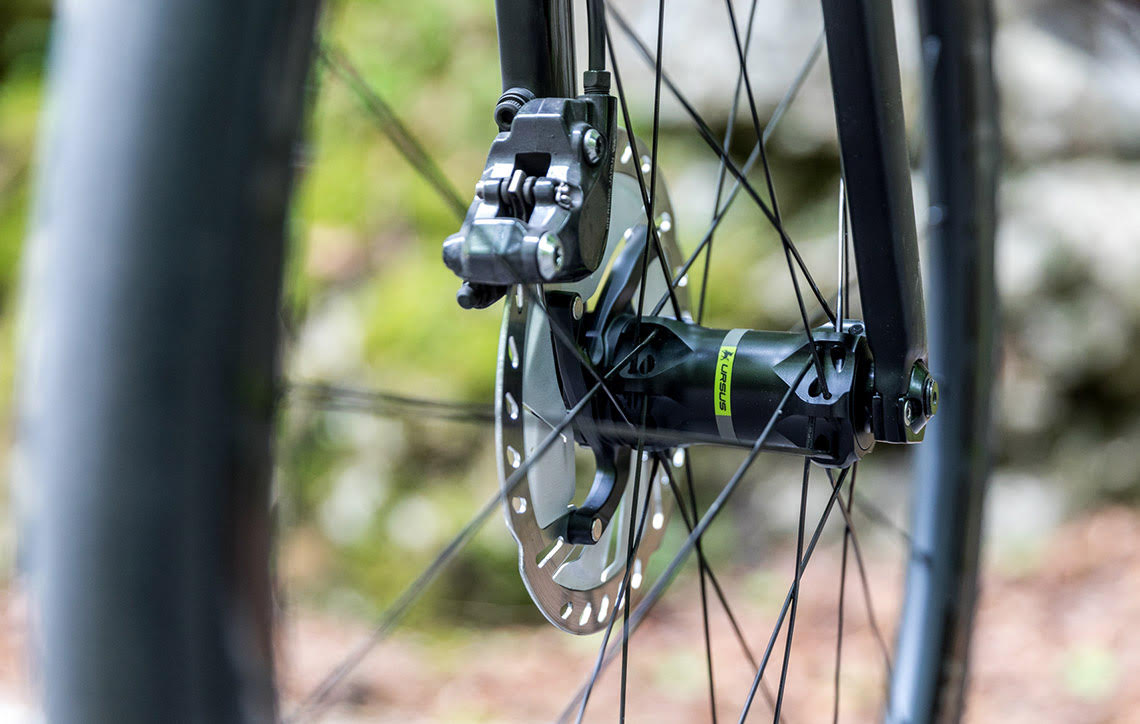
Disc brakes can be controlled by cable or hydraulically. Disc brakes are a bit more complex to operate than pads due to their significant stopping power , but when used correctly, they represent an innovation that can certainly improve road safety. Discover all Ursus disc brake wheelsby clicking here.
TS47 EVO
TS47 EVO DISC
So, is it better to have a rim brake or a disc brake solution?
The UCI's openness to disc brakes and the resulting reaction from wheel manufacturers has sparked a debate among enthusiasts: is it better to use a disc brake or a traditional rim brake?
From a physical standpoint, the concept remains the same: a body collides with another rotating body. The contact between the two bodies creates friction, which slows the wheel's speed. This friction generates friction that causes the two bodies to overheat and wear out.
With rim brakes, since the nitrile or butyl rubber component butts against the rim's braking surface, braking efficiency can be compromised. For example, in rainy conditions and on a slippery braking surface, the friction created by the pad will be reduced, exposing you to the risk of delayed braking. Another disadvantage of this system is the wear of the braking surface , which could eventually force you to replace the rim. Overheating of the surface due to friction could also cause problems: in some low-quality models, this could even lead to a burst inner tube or a broken rim.
Disc brakes don't apply force to the braking surface, but instead lock the wheel through the hub. This safety feature is widely used in the automotive and motorcycle industries, but also in cycling disciplines such as mountain biking and cyclocross, where wet and muddy trails are more common. The reason for this is the increased braking precision, which greatly reduces road hazards. What's more, since braking is more powerful, less force is required on the brake levers, thus reducing brake fatigue. The disc brake system is therefore a modern yet proven solution, which we believe will become increasingly popular in the coming years, even on road bikes .

In conclusion
Road bike wheels: disc brakes vs. rim brakes: which should you choose?
Together, we discovered that disc brakes are now the most modern and effective solution, even on the road. As manufacturers, we're convinced that once the skepticism stemming from this innovation has been overcome, the most performance-demanding cyclists will readily opt for disc brakes.


