

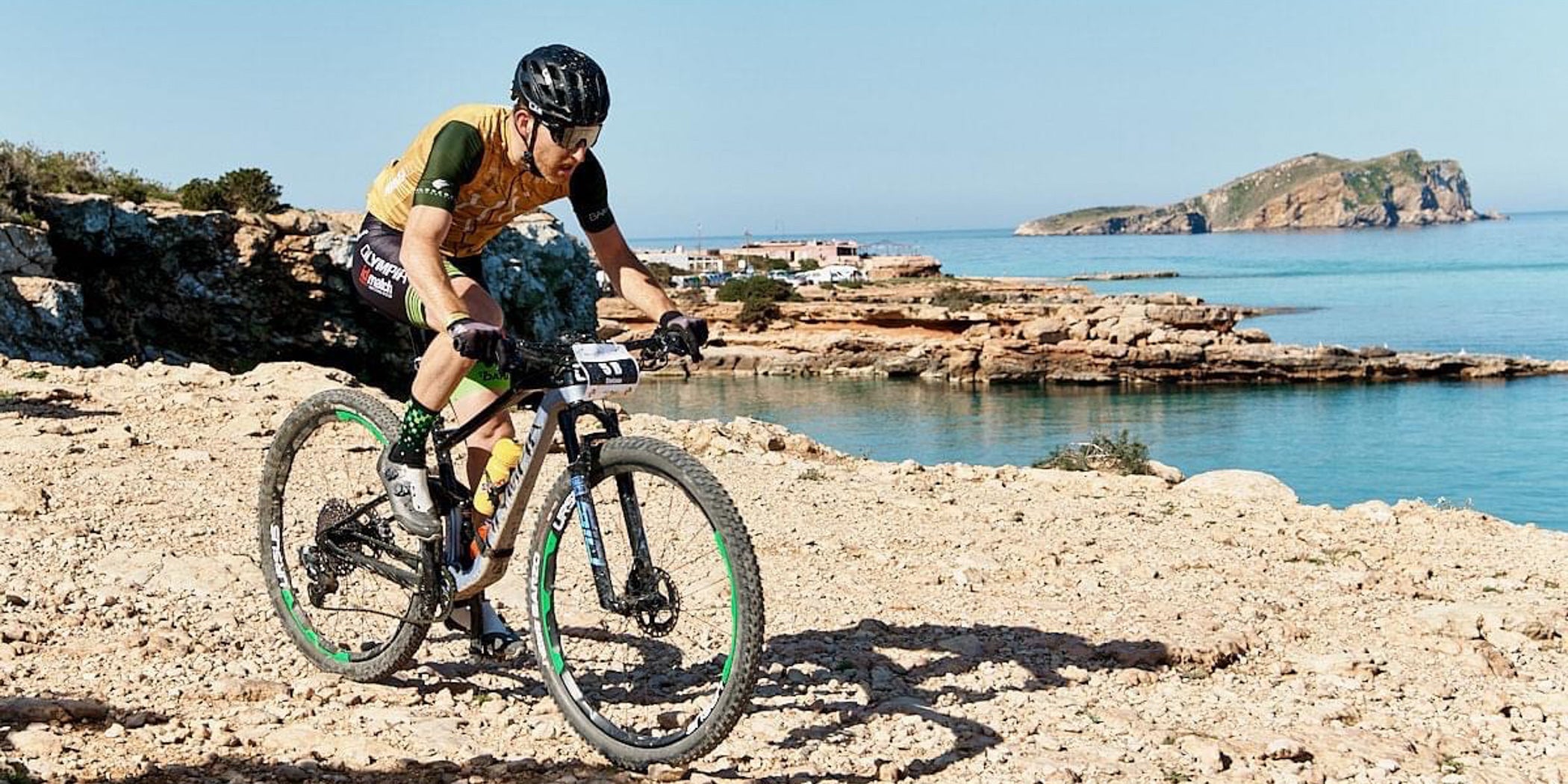
The world of fat tires is currently the most diverse in the world of cycling, thanks to the vast array of dedicated disciplines that revolve around mountain biking. But which is the toughest? Which is the most fun? We talked to Mauro Bettin, former champion and team manager of the phenomenon Kerschbaumer at Torpado Ursus.
Mauro, what do you think is the most important MTB discipline?
“From my point of view I can say that the main discipline among the various ones existing in the mountain bike panorama is without a doubt cross-country (we in the industry abbreviate it to XC for convenience), which is what I deal with in my work with the guys from the Torpado Ursus team.”
Why do you think XC plays such a primary role?
Well, XC is the ultimate expression of strength, technique, and endurance. Here, an athlete's technical prowess in tackling a course—what we're accustomed to calling class or even talent—is certainly crucial, but it alone isn't enough to guarantee sufficiently consistent results . The other key factor that makes an athlete's performance possible is the engine, that is, the explosive power of the legs combined with the lung capacity to make the heart and muscles work to the maximum stresses the human body can naturally withstand.
While in Marathon athletes favor a slower pace for longer distances (60/120 km with 2000/3000 m of elevation gain), and in Downhill technique and courage are what make the difference, in XC the cyclist must be able to give his all along a circular circuit of length between 3.8 and 4.5 km repeated for a certain number of laps. XC races normally last 1.2/1.5 hours and are tackled at sustained speed over roots, rocks, jumps and single tracks .
Testifying to the importance of cross-country is the fact that in addition to having a World Cup stage circuit and a single event as regards the World Championships , XC is the only MTB discipline to have been included in the Summer Olympics programme.”
What other MTB disciplines exist?
Very popular today (also thanks to the growing popularity of electric mountain bikes) is All Mountain or Trail , an activity that comes close to the spirit of classic MTB. Here the rider tackles long excursions on trails immersed in nature, without the hassle of the stopwatch . We can then find a competitive version in Enduro , an up-and-down race consisting of special stages (PS) interspersed with transfers like those seen in rallies. The race time is only timed during the descents, so the transfers can also be slow, as they are not considered part of the performance. Furthermore, compared to XC, the downhill component is prominent.
Outside of the aforementioned cycling disciplines, there are also those called gravity , that is, those performed entirely downhill. Among them we count Freeride (free descent and ascent along mountain trails), Downhill and Four Cross (4X) . Here the types of bikes involved also change completely: full-suspension aluminum and carbon are designed to give the best performance downhill and to be more resistant to jumps and major impacts. If in Freeride the bike is more pedalable, in Downhill and 4X the bike is special and suitable only for downhill. In fact, it is a question of tackling very high-speed routes during which the necessary technical level must be combined with a certain dose of composure. Compared to Downhill, in Four Cross the challenge is elimination: four riders start simultaneously from a gate and only two of them access the next round, after a descent made up of various jumps. This is a relatively new specialty, which is usually raced with a fron or a full-suspension with short travel (almost a BMX)”.
In conclusion
Speaking with an insider like Mauro, we found confirmation that mountain biking is truly an extraordinary world, whose vastness deserves to be explored in every facet. Whether you're a two-wheeled novice or a road racer seeking adventures off the beaten track, the key to enjoying mountain biking is choosing the right discipline for your physical characteristics and motivations. We hope this article has given you a basic understanding of the disciplines and different types of mountain biking.


