

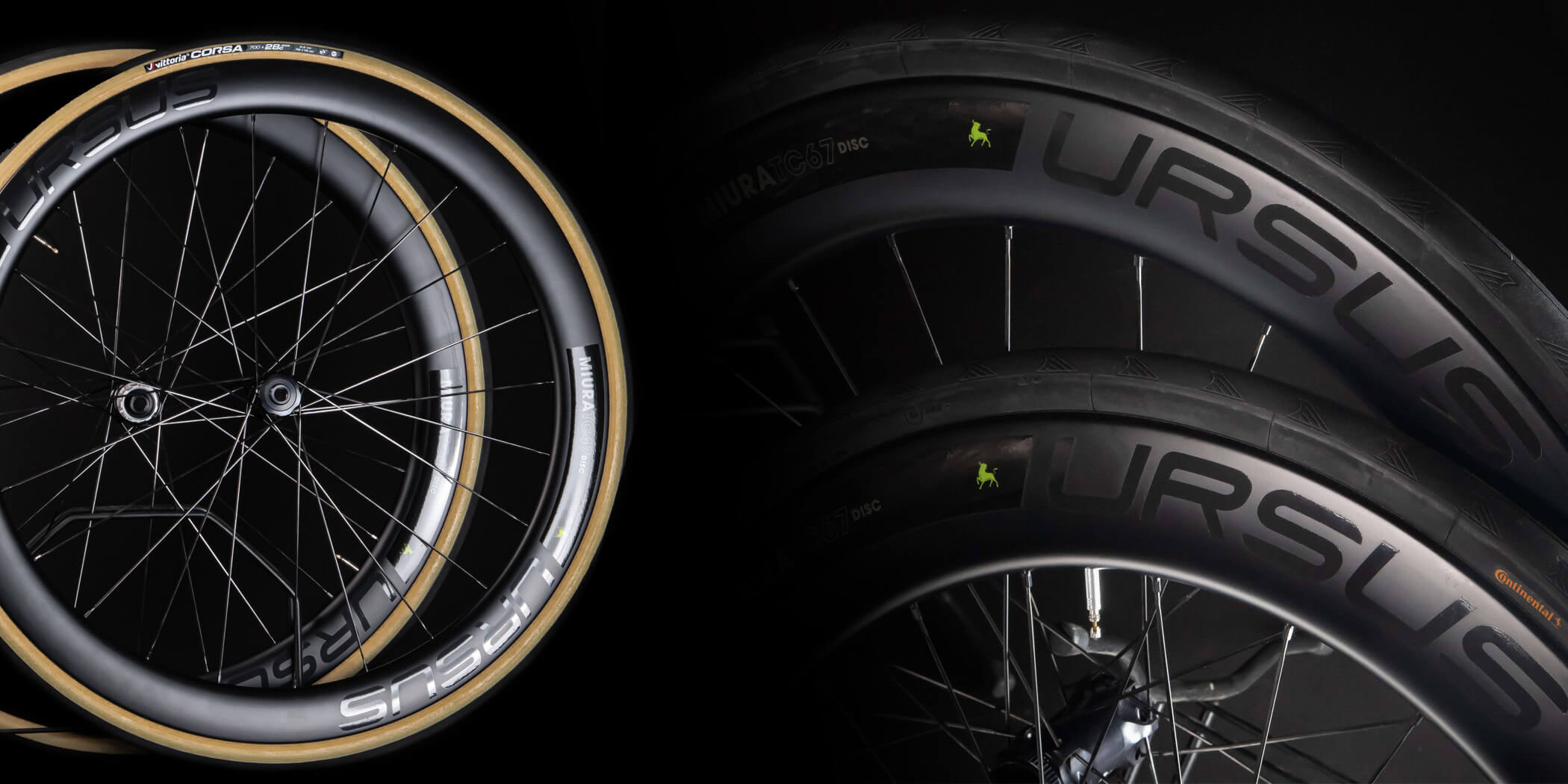
Road bike wheels and triathlon wheels have small differences to optimize the performance of the bike during competition.
Of course, in this choice a lot also depends on the type of race you have to face : speed, long distances, endurance?
Some seemingly minimal technical adjustments can improve your bike's performance during a race . In this article, we describe the characteristics of road wheels and triathlon bikes.
First, however, some general tips for choosing wheels for your bike , both for road cycling and for triathlon.
Some tips valid for all disciplines
There are some characteristics that apply to all cycling disciplines, as they depend on purely physical and mechanical issues. Knowing them helps you identify the best solution for the race you're about to tackle.
1 - High profile wheels: for Triathlon and Road they are more aerodynamic
High-profile wheels always have more aerodynamic thrust . They're taller and heavier. At the start, you have to apply more force to the pedals to gain speed, but as you race, they accumulate and release more kinetic energy .
You may prefer them in competitions where speed and endurance go hand in hand.
2 - Tubeless is more resistant and absorbs impacts
Tubeless tires don't have an inner tube. They're becoming increasingly popular because they allow you to run lower tire pressure on your road or triathlon bike (but also, for example, on cyclocross or gravel bikes).
With lower pressure, the tire is also less prone to punctures and tears . There's also an advantage for the athlete, because tubeless absorbs impacts during the race and therefore reduces mechanical stresses that can damage both the bike and the body.
Just a reminder: to fit tubeless tires you need to choose wheels with a slightly wider rim.
3 - The disc brake modulates braking in an advantageous way
Disc brakes were a true innovation for bicycles, initially for road cycling and now spreading to all disciplines. Whether on triathlon wheels or road bike wheels, they help you modulate braking just like in a car .
This type of brake is becoming the standard, thanks also to the fact that the width of the rims has been widened to accommodate the discs.
Now that we've got a handle on the general situation, let's get to the details. What differentiates road bike wheels from triathlon wheels?
The characteristics of road bike wheels
In a very schematic way, here are some useful parameters for identifying the characteristics of road bike wheels :
- average rim width: 17 mm (but wider rims of 19-21 mm are becoming popular);
- profile height: 33 to 45 mm
- average weight: from 1200 grams to 1600 grams, depending on the construction material and rim size;
- coverage: preferably tubeless;
- brakes: preferably disc;
- construction material: aluminum or carbon.
Both aluminum and carbon are lightweight and durable materials, but carbon significantly outperforms : it's super lightweight and gives the bike a stiff, highly responsive feel during racing. If you're choosing a racing wheelset, carbon can undoubtedly help you boost your performance. If you're just starting out on a road bike or want to train, you can start with a durable aluminum wheelset that balances performance, cost, and wear resistance.
The characteristics of wheels for triathlon
Now let's get to the triathlon. How do you choose the right wheels for your bike? The answer is quite complex because there are so many triathlon disciplines.
You may simply need wheels for your road bike, for example, for Olympic or Sprint Triathlons. The characteristics are basically the same as those described above.
But for endurance competitions, Ironman, rough terrain, MTB triathlons, etc. the situation changes dramatically.
Let's try to schematize this case too:
- The height of the profile
- low profile wheels (less than 30mm): for uphill or frequently relaunched routes;
- medium profile wheels (30 - 50mm): versatile, adaptable to any type of competition;
- high profile wheels (over 50mm): for races on flat or gentle slopes and for endurance races such as the Ironman .
- The tire: preferably tubeless even for the Triathlon bike;
- Brakes: preferably disc.
- Other accessories to choose carefully:
- the hub: quality hubs help the wheel roll and therefore increase the performance of the Triathlon bike in competition ;
- The lenticular wheel: it is high-performance but also very unstable in crosswinds. It is difficult to control, so it is recommended only for experienced athletes with high technical ability on the triathlon bike.
When to choose high-profile wheels for triathlon
High-profile wheels for triathlon bikes are especially suitable for flat, endurance-demanding courses. For Ironman, they're practically indispensable.
However, nothing stops you from using them in other contexts: many athletes prefer to always mount tall wheels with a wider rim, tubeless tires and disc brakes.
We've already explained that aerodynamics is the real advantage of high-profile triathlon wheels . However, you should also consider that these wheels lose some stability when racing in crosswinds and that, in some races where you ride in a group, they can't express their full potential.
If you want to get the most out of high-profile triathlon wheels, we suggest choosing carbon ones : very light, stiff and extremely responsive.
Ursus Triathlon Wheels
At URSUS, we design, test, and build technologically advanced triathlon wheels . We prioritize innovative materials and designs to continually elevate the performance of triathlon bikes.
Our range of triathlon wheels meets the needs of different athletes, amateurs and professionals, for all types of competition.
Find all available models at: https://www.ursus.it/it/magazine/ruote-per-bici-da-triathlon-le-medio-o-alto-profilo-in-carbonio-di-ursus


