

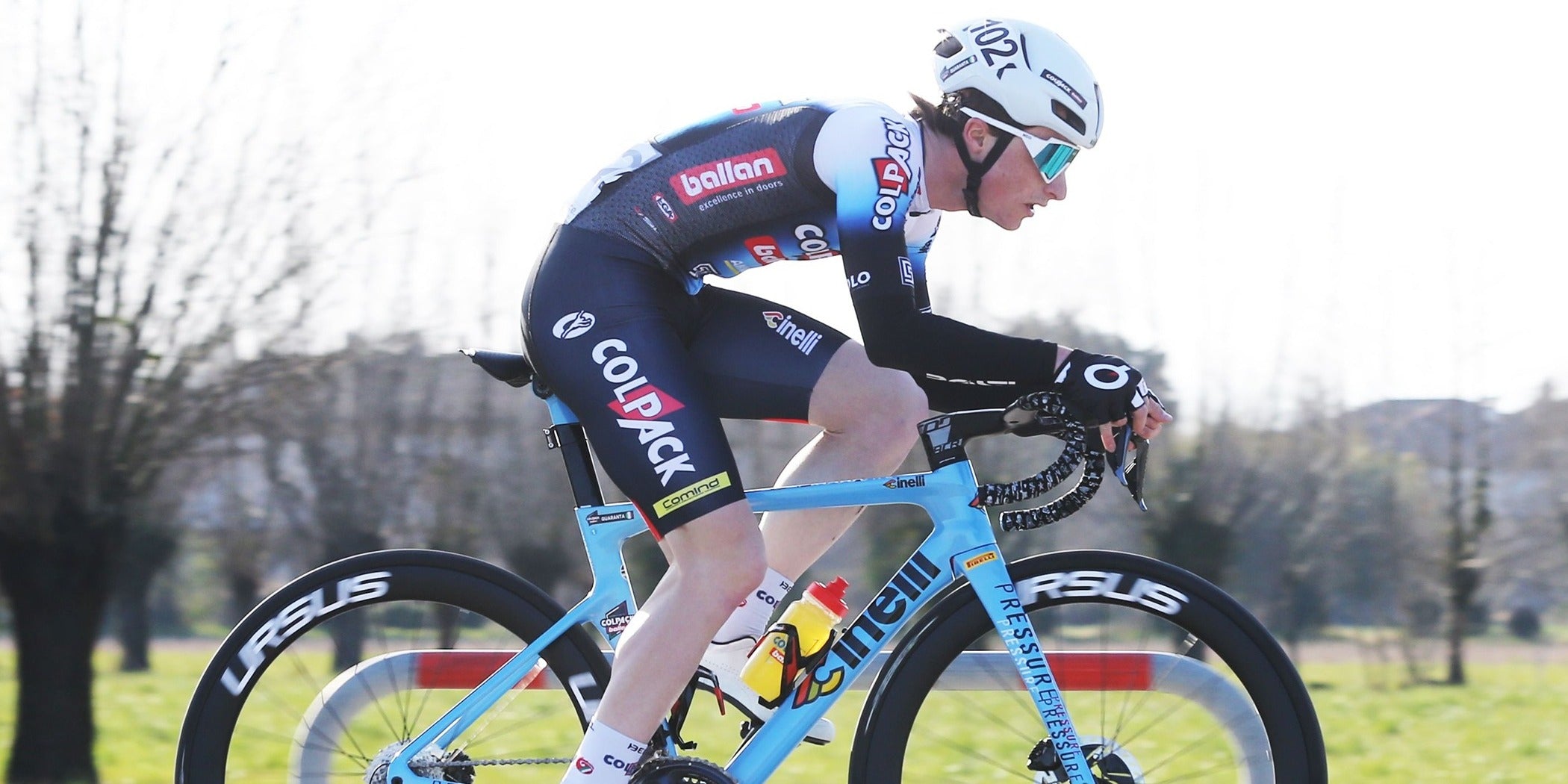
Some are highly technical and high-performance, others are designed to provide comfort and safety. All, however, must be chosen with the utmost care and must be perfect for us and our bike. Here are the most important racing bike accessories.
From shoes and pedals, to backpacks and lights, including oil and brake hoses. Every component has its strategic importance. Every detail can make a difference in performance and safety.
Let's see, then, what are the most important technical accessories for racing bikes and how to choose them.
Shoes and pedals
The pedals are the accelerator of our bike; the harder we push, the faster we go. And to push hard, you need the right pedals and the perfect shoes. Let's start with the pedals. Among amateurs, there are those who choose to use normal pedals , the classic ones, rather than quick-release ones. In this case, to improve the pedaling, to make it more comfortable and effective, it is possible to use adapters , which allow the shoes to better adhere to the pedal. Or, you can use pedal straps , which, especially during maximum push, such as when climbing, allow the foot to remain firmly on the pedal.
It's a different story if you decide to use clipless pedals, those that allow the shoe to fit into the pedal and form a single element. These are obviously the pedals that provide the best performance , both uphill and on the flat, and allow the cyclist to feel at one with the bike, thus increasing the sense of safety and confidence while riding.
They differ mainly in material and weight :
- those in titanium and carbon are the lightest, but also the most expensive
- The aluminum ones are slightly heavier, but cheaper.
For those new to road biking, it's always a bit difficult to convince yourself to use clipless pedals, as it's hard to get over the idea (and fear) of having your foot glued to the pedal. However, this is the case for almost everyone; after trying them just once, it's virtually impossible to go back, as the performance and pedaling comfort are decidedly superior.
Shoes , obviously, must be matched to the type of pedal you choose. If you use classic pedals, the advice is to choose a comfortable, lightweight shoe that adheres as well as possible to the pedal . If you choose a clipless pedal , however, you need special shoes, with the attachment that fits into the pedal . To insert the shoe into the pedal, simply make a small rotation and push with the tip of your foot. To remove it, in addition to the rotation, you must pull your foot outwards.
As with pedals, shoes vary mainly in weight and material:
- those with a lighter and stiffer sole , such as carbon ones, are more expensive, but also more stable and safe
- The plastic ones, on the other hand, are heavier, more flexible, but also cheaper.
Comfort and safety
These are the two most important details to look for when riding a bike. To have both, our racing bike must be perfect . But perfect in what sense? It must be the right size (based on your height) and it must be cared for and maintained over time .
As for size, a fundamental component is the handlebar stem , commonly called the stem. There are two elements to take into particular consideration:
- the material (and therefore the weight)
- the length
Regarding material and weight, the same applies to shoes and pedals: carbon and titanium offer lighter weight and safety (at a higher cost), while aluminum offers more weight, at a lower cost . Regarding length, this is closely linked to the cyclist's height and position on the bike. Therefore, in this case, it is essential to consult an expert to verify the correct position on the bike and choose the right stem length. If you pedal with a handlebar stem that is too short or too long, the pedaling will be neither comfortable nor effective, and there could even be unpleasant physical consequences.
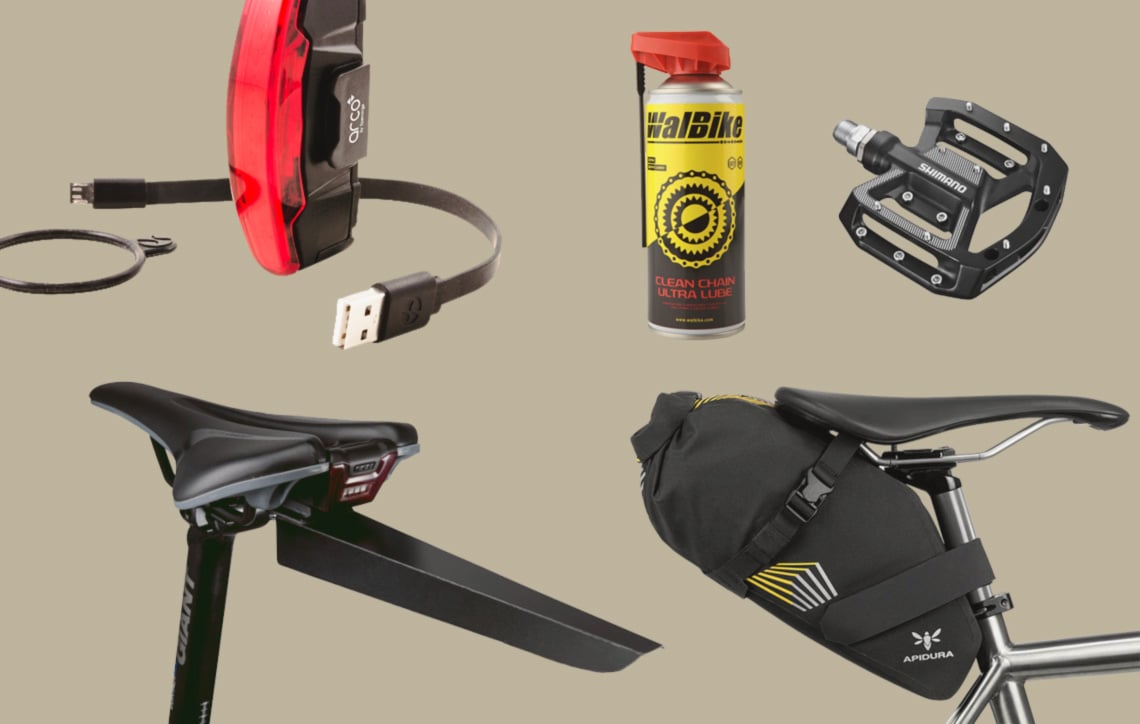
For perfect bike maintenance , chain oil is a very important element. The chain must always be properly lubricated, never too greasy, but not dry either. Proper lubrication ensures smooth pedaling and a longer chain life. What product should you use to best lubricate the chain? The advice is to avoid spray products , as they can be damaging to other parts of the bike they contact, especially the disc brakes. A dropper product is better , easy to apply just to the chain, on each individual link. It's important to remember that before lubricating, the chain must be cleaned, and therefore a degreaser is also necessary.
If you're riding at night, it's best to see well... and be seen! Your ride may last until evening, when the sun has already set. In this case, it's crucial for safety to be able to see well and be visible to others, and bike lights can be extremely useful, both front and rear. The front light can be white or yellow , must be steady, and can be mounted on the handlebars or fork. The rear light, on the other hand, is red , mounted on the saddle or stem, and can be steady, alternating, or flashing.
The light output of racing bike headlights is measured in lumens, and almost all modern lights are now LEDs, powered by lithium batteries. The price obviously varies based on the light's power—the width of the road it can illuminate—and battery life.
Saddle bag, backpack and mudguard
If you decide to go on a longer ride than usual, perhaps even lasting several days, these three road bike accessories can be essential.
Saddle bags come in various sizes. Amateur cyclists usually carry smaller ones to carry the stuff they need to change a tube in case of a flat. Larger ones, on the other hand, can be used to carry more accessories, such as a change of clothing, food, or items like keys and a cell phone. Two saddle bags, one larger and one smaller, can easily coexist, as long as their attachments allow one to be stacked on top of the other, under the saddle, and on the seatpost.
When it comes to backpacks , the selection is obviously very wide. To help you choose the right one, here are some tips:
- It must not be too big so as not to negatively affect posture and pedalling quality.
- It must be very comfortable , try it out carefully before buying it, otherwise after a few kilometres you will already be in great difficulty
- it must be able to fit your body perfectly
- must be waterproof
So, carefully choose the number of accessories you bring with you: avoid the superfluous and learn to distribute weight and objects well between your backpack, jersey pockets, and saddle bag.
Finally, for a very long ride, where you might encounter all kinds of weather conditions and perhaps even ride on dirt roads for a while, a mudguard could be very useful. They're generally made of polypropylene, plastic, steel, or aluminum; some are suitable for all types of bikes, while others have different widths and should therefore be chosen based on the tire size.
Conclusion
Accessories for your racing bike are elements that complement your bike, making it safer and more efficient. So choose them carefully, seek advice from experts, and... pedal!


