

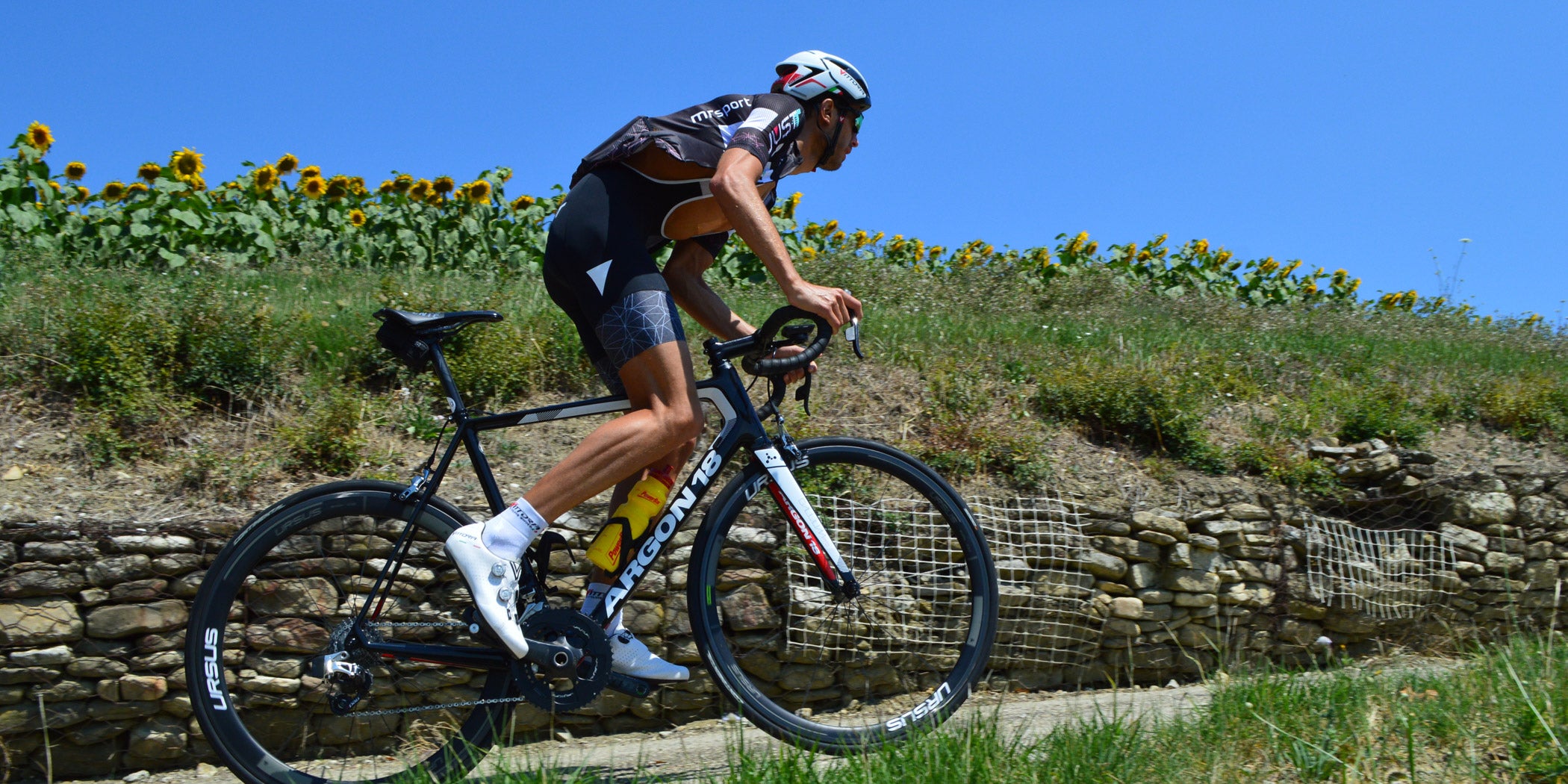
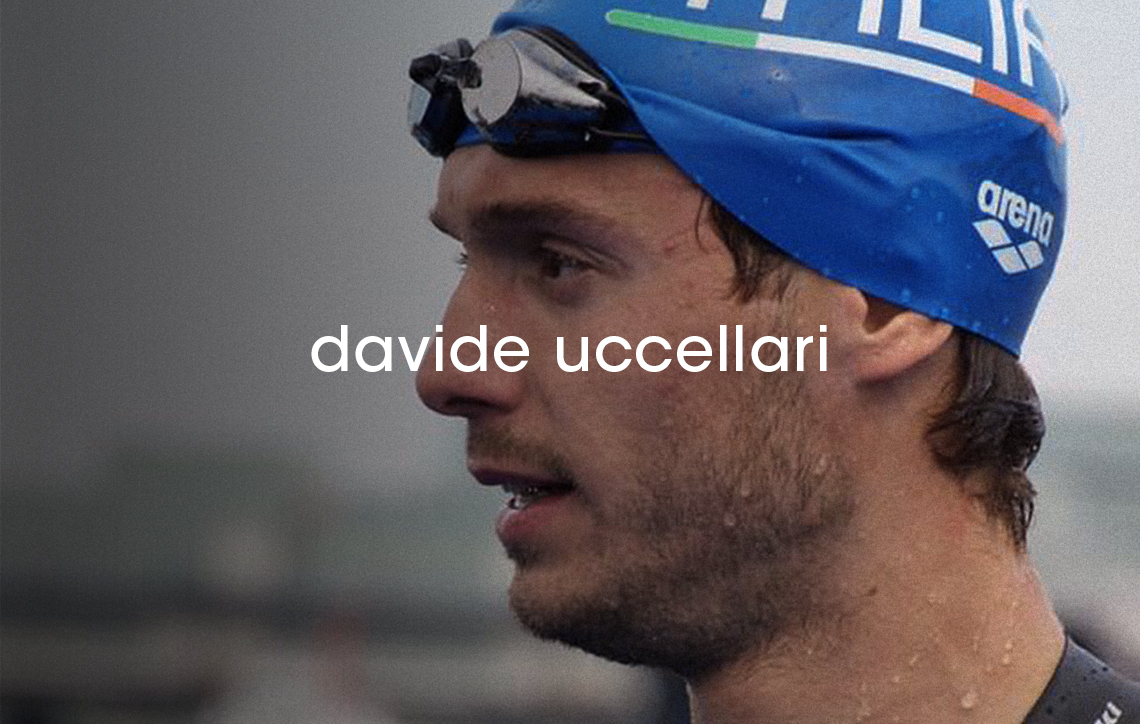
A chat with the Italian Olympic medalist at London 2012 and Rio 2016 to better understand what it means to compete in triathlon at a high level. What's the difference between triathlon and Ironman? How does a professional triathlete train? What equipment do you need for triathlon? Let's find out with Davide Uccellari.
Davide joins Ursus accompanied by his father, his biggest fan, who follows him on every outing. A calm young man, our Olympic triathlete: from his words, you can sense the passion and sacrifice required to compete in triathlon at a high level with consistent results.
Who is Davide Uccellari?
We first ask him a little about himself, about how he got into this activity from the beginning. Davide confidently explains how he first entered the pool at the age of two and has never left, despite participating in other sports like running and track and field. After swimming, running is his second love: at nine, he entered his first running race and from there, he slowly began to mix and match his skills, gradually adding cycling.
"For a triathlete, swimming is a fundamental skill," Uccellari explains. "Yes, because if you can keep up with your opponents in the water and then make a good transition on your bike, you won't give the group a chance to break away. If the group goes off on their bikes without you, it becomes almost impossible to catch up. A triathlete with a strong base in the pool will definitely be more difficult to compete with."
Davide competes in sprint and Olympic-distance triathlons, an activity that led him to represent Italy at the London 2012 and Rio 2016 Olympic Games, as well as winning two gold and four silver medals at the national championships. Regarding his participation in the Olympics, he says: "It was amazing to see the number of fans cheering the triathletes. This activity isn't very popular in Italy, but as a sport of Anglo-Saxon origin, in England it was fantastic to compete against the world's best in front of such a large crowd. A unique experience."
Triathlon according to Davide Uccellari
Triathlon and Ironman: distances and differencesWe were very curious to know what Davide Uccellari thinks about Ironman, one of the most popular triathlon segments in the world. Why did he choose the Sprint and not the Ironman? Are you planning on trying some races in the future?
"The fundamental difference between the Ironman and the Olympic Sprint Triathlon is the distances, which are longer in the Ironman," Davide replies. "Personally, I haven't yet attempted Ironman distances. At a competitive level, the true dream for a triathlete is the Olympics, where you swim 1,500 meters, cycle 40 kilometers, and run 10 kilometers. These relatively short distances mean that the real focus of the challenge is performance, that is, the final placing achieved. This makes the selection of athletes more narrow: in short, you have to go through qualifications and rankings. You can also draft other athletes during the bike section.
In the Ironman, the philosophy is very different: you travel much longer distances, we're talking about 3,800 m in the water , 180 km of cycling, and 42.195 km on foot . Obviously, the enormous effort required to complete the race already becomes the performance that the triathlete seeks. The Ironman therefore arises as a dream or a challenge against oneself rather than pure competition with other triathletes. In the end, the time you manage to achieve matters more than the finish line ranking. For now, I have chosen to remain focused on Sprint distances: perhaps in the future, at a different point in my career, I might even consider trying the Ironman dream."
Triathlon: training and nutrition
How does a champion like Uccellari train? Davide explains that in Italy, it's difficult to find facilities that are prepared to consider triathlon as a sport in itself, rather than a combination of swimming, cycling, and running.
It's really not easy for beginners. There are no dedicated sports clubs, and to participate in races you have to travel many kilometers across the country, joining sports groups like the Fiamme Azzurre. I've often trained with different coaches to focus on the different components. My training partners are often not triathletes, but cycling professionals rather than track and field athletes. The ideal would definitely be to work in a more specific way: to do this, I try to participate in training camps around the world. This happens especially when I go to the national team, where I can find more suitable coaches and facilities.
"In terms of training sessions," Uccellari continues, "a triathlete typically trains 25 hours a week, alternating strength or recovery activities in the gym and pool with long-distance cycling or walking. A daily session typically lasts 2 hours."
To sustain this training pace, we think a balanced diet will be necessary. This becomes the next question for our Azzurro. "It's important to divide my calorie intake into several moments throughout the day. In addition to the three main meals, I add a mid-morning and mid-afternoon snack. I also carry supplements with me during training or the race, either in gel form or dissolved in water. I don't eat a big breakfast like you might think: no eggs, for example, I favor yogurt and toast with jam. It helps me stay lighter to face the day. On race day, however, I eat something extra mid-morning, so I'm ready and performing well for the start, which is usually set for noon."
Triathlon: difficulty
What are the biggest challenges for a triathlete during a race? Davide Uccellari focuses on the swim-bike transition. He explains how important positioning is and how to pay attention to avoid penalties.
A mistake in storing your equipment, a flaw in form, could spell doom for your dreams of racing glory. At the beginning of my career, I struggled to understand the rules correctly, but with practice, everything certainly becomes easier. I advise young people to spend time studying the equipment and the rules for its use. The details in triathlon are what can make or break you.
Triathlon: equipment
What equipment do you need for a triathlon? “Clothing-wise, you need a triathlon bodysuit and wetsuit, along with running shoes with elastic laces and cycling shoes with Velcro closures to speed up transitions. Then you need a swimming cap and goggles. Last but not least, of course, is the bike! There are very aerodynamic time trial models with high-profile wheels specifically designed for triathlon, although the current trend in sprinting is to use less extreme bikes, with medium-profile wheels, which in my opinion are the best technical choice. For example, I use the Ursus Miura TS47 Evo or the Miura TC37 . In training, however, I prefer the aluminum Athon .”
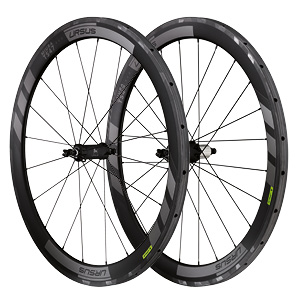
TS47 EVO

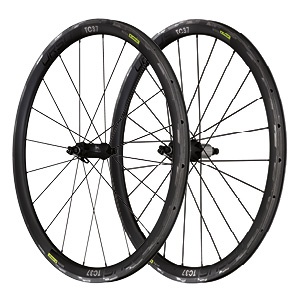
TC37

In conclusion
We talked about triathlons, distances, and training with Davide Uccellari. It was a wonderful afternoon where we learned about his training, nutrition, and the technical requirements of a triathlete of his level regarding his equipment. Thanks, Davide, and good luck with your upcoming challenges.


