

Triathlon is a sport recognized by the International Olympic Committee that is gaining an ever-growing following among athletes who aren't afraid of hard work. It's no coincidence that it's considered one of the toughest sports in the world, as it demands every muscle fiber of the athlete. But above all, it's a test of willpower and a challenge against oneself.
Is this what makes Triathlon so fascinating?
Triathlon: what is it?
When we talk about Triathlon we are talking about a sport (individual or relay) with a very specific characteristic: it is made up of three different disciplines which each occupy a distinct phase of the race (section) and are practiced one after the other by the athlete during the competition.
They are swimming, cycling and running.
The three legs are punctuated by phases in which triathletes (as those who practice the sport are called) change equipment. These changes are called "transition phases." Managing transition phases quickly and effectively is almost as important as managing swimming, cycling, and running.
How a Triathlon Race Takes Place
At the starting blocks, each category (male and female) starts alone. Races can be individual or relay, as mentioned. Each competition combines the three sections of swimming, cycling, and running.
These are the characteristics common to all races but each competition may have particular regulations and may refer to a specific type of Triathlon.
The two most popular types are undoubtedly the Olympic Triathlon and the Ironman. The disciplines and the order in which they are competed remain the same, but the distances are different.
The distances in the Olympic Triathlon are 1.5 km for swimming, 40 km for cycling, and 10 km for running . This type of triathlon is what we consider standard. Competitions during the Olympic Games are held over these distances.
Ironman, on the other hand, was invented in the USA and is actually a trademarked name. It was so successful that today almost all triathletes dream of winning an Ironman competition, because it truly challenges their physical and mental limits.
The distances in the Ironman are considerable: a 3.86 km swim, a 180.260 km bike ride, and finally a true marathon of 42.195 km running . Endurance, concentration, and strong nerves are the hallmarks of Ironman participants.
The history of Triathlon
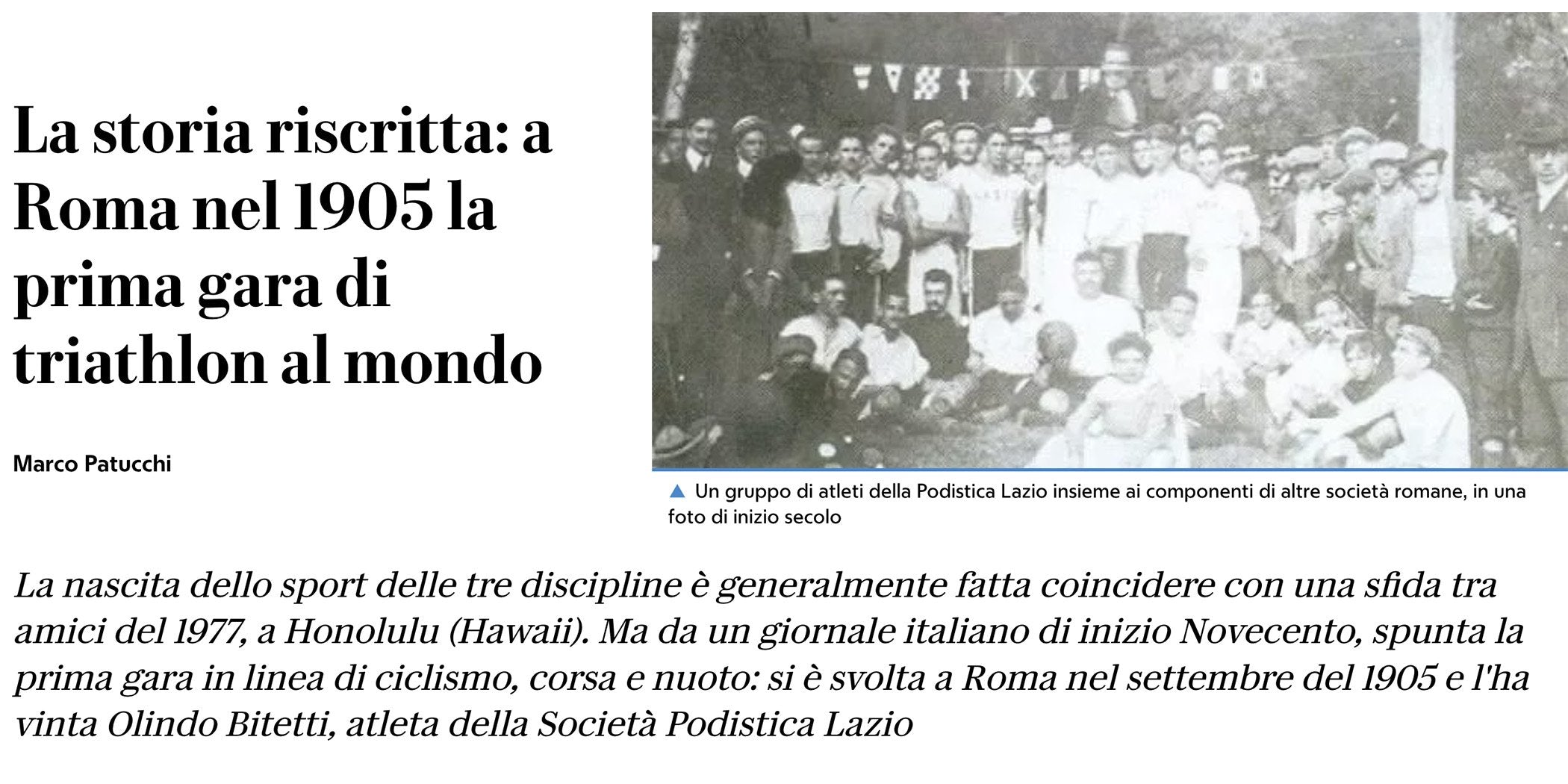
Today, almost everyone knows about triathlon: it's hard not to be fascinated when you hear about such a demanding sport. Yet triathlon is just over 45 years old.
Its story began in Hawaii, in 1977, on a US Army military base.
Some fellow soldiers couldn't decide which was the most challenging endurance race at the time: swimming, cycling, and running. Hence the idea of combining the three disciplines into a single race divided into three legs: the Triathlon immediately became the toughest endurance race.
Triathlon's allure has been incredible. Just 12 years after the Hawaiian race, the first world championship was held in Avignon, France, under the auspices of a newly formed international federation, the International Triathlon Union. At the same time, a federation was founded in Europe, and the European Championships were held.
The Olympic turning point, however, came only in 2000, at the Sydney Olympics, when Triathlon was admitted as an Olympic sport for the first time.
The number of amateur and professional athletes passionate about triathlon has grown steadily over the years, and has continued to grow recently. The immense international success of the Ironman has likely also contributed to the sport's success. Indeed, the world's most challenging endurance race enjoys incredible global resonance, especially because its participants often include stars and well-known faces.
Its aura of legendary achievement and the support of famous people have further shed light on this sport.


