From north to south, passing through the central regions, our country offers endless opportunities for those who want to combine tourism with sport and discovery with effort, especially by bike. For gravel bike enthusiasts, here are some of the most beautiful routes.
Gravel bike: you can go anywhere
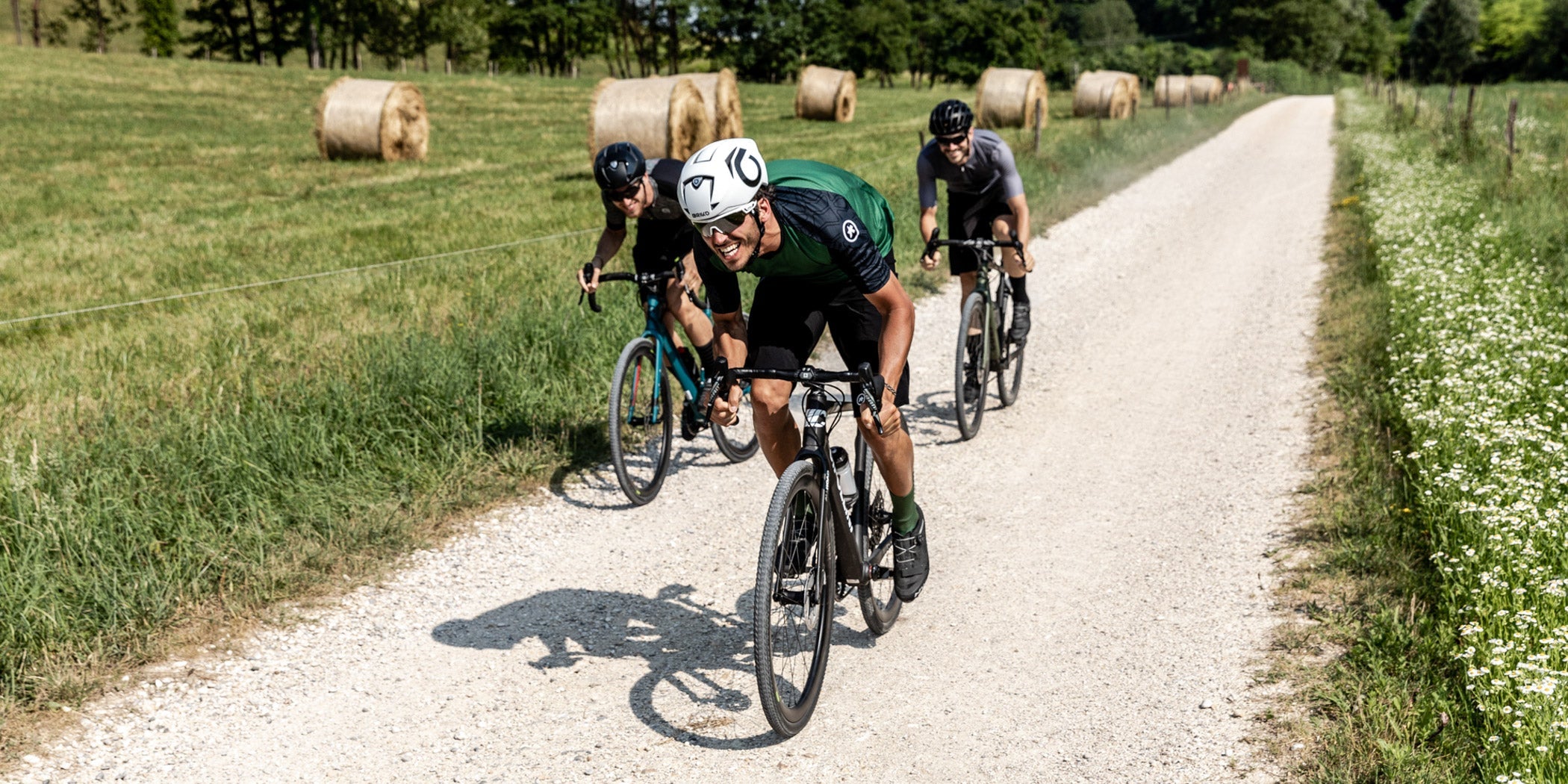
It's not a road bike , nor a mountain bike , nor even a cyclocross bike . So, what is it? Simple: a gravel bike . The meaning of the word gravel , literally gravel , gives us an idea of what this vehicle is used for: a versatile bike, suitable for gravel and dirt trails , but also asphalt. In other words, routes like the now famous Eroica.
Here's what it is, how it's made and how the gravel bike trend was born .
Around the boot
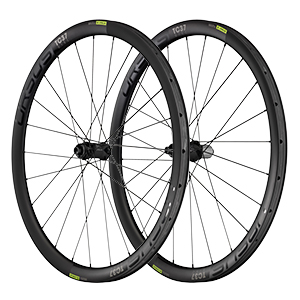
While gravel biking originated in the United States because of its abundance of unpaved secondary roads, Italy certainly has no shortage of unpaved trails, immersed in nature and perfect for mountain biking, hiking, and trekking. Our country offers endless opportunities for cycling enthusiasts, with varied and rare beauty. And to tackle these varied terrains, there's nothing better than a gravel bike , whose wheels and construction allow you to ride on any type of road. Here's how to choose the right wheels for your gravel bike .
Let's discover three gravel bike routes with three different difficulty levels.
Get excited by pedaling in the Tuscan Maremma
The first gravel bike route we're offering is truly breathtaking, rich in nature, and passes through breathtaking locations and landscapes. We're in Tuscany, in the Maremma region , with a route that starts in Capalbio and passes through Orbetello, Argentario , and the natural oases of Lake Burano. From Capalbio to Capalbio, the route is a 76 km loop, a mix of asphalt and dirt , with little elevation gain and therefore not difficult.
Starting from Capalbio Scalo, taking provincial road 69 towards Ansedonia, after a few kilometers you'll be immersed in the spectacular WWF oasis of Lake Burano. Here, it's undoubtedly time for a first, very brief stop for a few souvenir shots. We set off again towards the top of the Ansedonia promontory, from which you can enjoy a unique view of the Tyrrhenian Sea. From here, we head towards Feniglia, following a 6 km stretch of sand that connects Ansedonia to the Argentario.
From Le Miniere, we pedal for a while on a provincial road to reach Porto Ercole and then Porto Santo Stefano. Traveling through nature and history, we've already covered more than 50 km. Now, we head on our gravel bikes towards Orbetello, a town surrounded by the sea. With its Etruscan walls, cathedral, the Polveriera Guzman, and the walls of Siena, it's the perfect stop on a route suitable for those who love cycling and discovering magnificent places.
From here, in a few kilometers you can return to the starting point of Capalbio Scalo.
A route for all cycling enthusiasts, even beginners. An itinerary to enjoy from the first to the last kilometer.
On the roads of Franciacorta
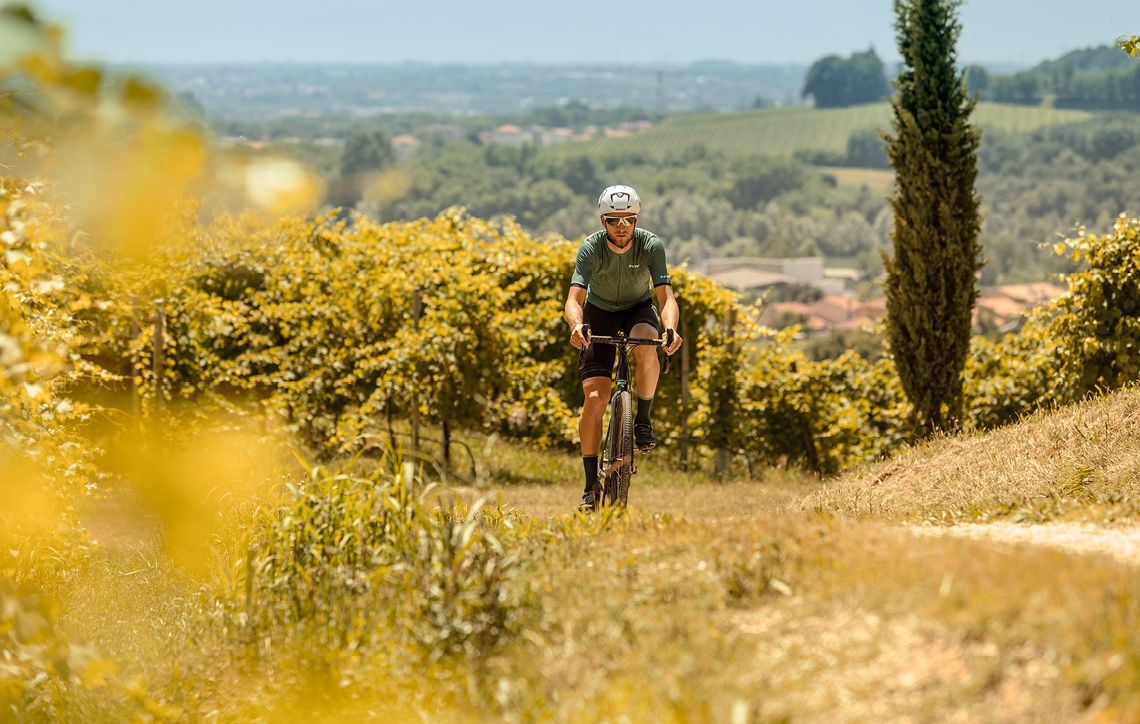
Here's a wonderful ride through Lombardy, in the province of Brescia. 70 km long, with about 1,000 meters of elevation gain, a loop that starts in Val Trompia, reaches Santa Maria del Giogo, and returns to the finish line via Franciacorta .
The route starts not far from the center of Brescia, from which you can easily reach the Val Trompia cycle path, characteristic for its location along the Mella River.
After about ten kilometers on a 100% gravel road , you reach the town of Ponte Zanano, where a mixed asphalt and dirt climb begins. This climb includes some very tough sections, with gradients exceeding 20%, which may force you to dismount and walk a few dozen meters. Once you reach the top, it's easy to see that your efforts were not in vain: just admire the view of Lake Iseo and Mount Isola.
We set off again, down a dirt road that runs through a forest and along Lake Iseo. We pass through the towns of Sulzano and Provaglio d'Iseo and join the Brescia-Paratico cycle path, heading towards Brescia. We ride through Franciacorta, passing through the towns of Monterotondo, Passirano, Paderno, Rodengo Saiano, Gussago, and the Sant'Anna forest, before returning to Brescia.
A medium-difficulty and decidedly picturesque route, recommended for those who love cycling on dirt roads and forest roads, with sections of asphalt and cycle paths.
From Parma to Lavagna, the bar is raised
177 km with 1,500 meters of total elevation gain, for a decidedly challenging itinerary between Emilia Romagna and Liguria.
Departing from Parma , head towards the Taro Regional River Park. A 20-km stretch of flat gravel and some single-track along the river... great fun! You'll pass through the town of Fornovo di Taro and begin another off-road section, following the ancient Maria Longa road, used since the Lombard era. There's a challenging 12-km ridge line with a few steep climbs, but nothing too difficult, with the terrain alternating between gravel and clay. Here, you can admire the ruins of Roccalanzona Castle, while you ride another 3 km of pure gravel before reaching the town of Maneia, where you'll descend to the provincial road.
Another 7km climb, over gravel and asphalt, and a series of ups and downs that lead to the village of Bardi, renowned for its magnificent fortress perched atop a red jasper spur. We're 80km away... and the best is yet to come!
Now the most challenging part begins, with climbs on gravel terrain to reach Sarizzuola. Continuing, you reach the village of Pilati and from there descend following the Ceno stream and then climb again, with a very challenging initial section that then gives way to easier stretches. You climb up to the Penna refuge: here you are 120 km away and the climb is not over yet. On a beautiful gravel path, you cross the Penna forest: we are in the magnificent Aveto Regional Natural Park . Scenic splendor and fatigue blend together, and pedaling, for a few moments, becomes easier. You must reach the Spingarda Pass at 1,551 meters above sea level, and the last kilometer before the summit exceeds an average gradient of 10% . From here, you descend, then climb again, and finally descend for the last time. During the descent, you can admire the Giacopiane and Pian Sapeio lakes, the verdant Sturla Valley, the Zatta massif, and the Penna and Aiona peaks: a unique spectacle!
At the bottom of the descent, take the provincial road, cross the bridges over the Sturla and Lavagna streams, and join the Carasco cycle path. Following the Entella River, you reach Lavagna, where this challenging but beautiful route ends.
This route isn't for beginners, but rather for those with a reasonable level of fitness. It's just the right amount of challenging and offers breathtaking scenery. Ideal for gravel bike enthusiasts.
Conclusion
Gravel is for everyone. This is because Italy, thanks to its geographical configuration, offers a mix of asphalt and dirt roads that vary in length, gradient, and difficulty. These roads, however, have one thing in common: beauty. No matter where you are, if you want to ride your gravel bike on exciting and more or less challenging trails, there are dozens of opportunities for you. And if you're looking to get started with gravel biking, don't wait any longer: wherever you are, you're in the right place.